First Home Guarantee 2026: the 5% deposit scheme explained (Brisbane guide)
The First Home Guarantee lets eligible Australians buy with a 5% deposit and no Lenders Mortgage Insurance. Here is who qualifies in 2026, the Brisbane price caps, the real LMI saving on a $700k purchase, and what most guides get wrong.
TL;DR. The First Home Guarantee (FHG) lets eligible first home buyers purchase with a 5% deposit and no Lenders Mortgage Insurance (LMI), with the federal government guaranteeing the additional 15% to the lender. In 2026, the Brisbane price cap is $700,000 for the FHG. On a $700k purchase, using the scheme instead of a standard 5% deposit loan saves you around $28,000 in LMI. It is not a cash grant — it is an LMI substitute.
What the scheme actually is
There are three related federal schemes people mix up. All are administered by Housing Australia and delivered through a panel of about 30 participating lenders.
| Scheme | Who it's for | Deposit required | 2026 name |
|---|---|---|---|
| First Home Guarantee (FHG) | First home buyers | 5% | Formerly First Home Loan Deposit Scheme |
| Regional First Home Buyer Guarantee | First home buyers in regional Australia | 5% | Merged with FHG in some contexts |
| Family Home Guarantee | Single parents / eligible single carers | 2% | Distinct income and property test |
This article is about the First Home Guarantee. If you are a single parent, the Family Home Guarantee has better terms — see below.
The FHG is not a cash grant. The government does not give you money. It guarantees a portion of your loan to the lender so the lender treats your 5% deposit as if it were a 20% deposit — which means the lender doesn't charge LMI. That is the entire mechanism.
Who qualifies in 2026
To use the FHG for a Brisbane purchase in 2026, you need to tick all of:
- You are an Australian citizen (or a permanent resident, as of the 2025 expansion)
- You are at least 18 years old
- You have never previously owned residential property in Australia — jointly or solely
- Your taxable income is under the cap: $125,000 single / $200,000 combined for a couple (previous year's income used)
- The property will be your principal place of residence
- The property is under the Brisbane price cap of $700,000
- You are applying through a participating lender (not every bank participates)
- You have a genuine 5% deposit — some of it can be from a gift or First Home Super Saver, but the lender needs to see genuine savings
Two changes worth noting in the 2025 update:
- Permanent residents are now eligible (previously citizens only)
- The couple test now includes de facto partners regardless of marriage status
What the $700,000 Brisbane price cap means in practice
Property price caps vary by state and by metro/regional classification. As of 2026:
| Location | 2026 FHG price cap |
|---|---|
| Brisbane metro + Gold Coast + Sunshine Coast | $700,000 |
| Regional Queensland | $550,000 |
| Sydney + regional NSW centres | $900,000 |
| Melbourne metro | $800,000 |
| Perth + regional WA centres | $600,000 |
For a Brisbane buyer, this means most middle-ring suburbs (Carindale, Mount Gravatt, Coorparoo, Kedron, Wynnum, Sunnybank Hills) have qualifying stock — but pushing into blue-chip inner suburbs (Bulimba, Ascot, Hamilton, New Farm) usually puts you above the cap for a house.
The cap includes the total purchase price. It is not "$700k + stamp duty" — the whole property must be $700,000 or under.
The actual LMI saving on a $700k Brisbane purchase
This is where the FHG earns its keep. LMI on a $700,000 property with a 5% deposit ($35,000) is typically:
| Deposit path | Deposit amount | LMI premium (approx.) | Loan size after LMI |
|---|---|---|---|
| 20% (standard, no LMI) | $140,000 | $0 | $560,000 |
| 10% + standard LMI | $70,000 | ~$14,000 | $630,000 + $14,000 capitalised = $644,000 |
| 5% + standard LMI | $35,000 | ~$28,000 | $665,000 + $28,000 capitalised = $693,000 |
| 5% + First Home Guarantee | $35,000 | $0 | $665,000 |
That $28,000 saving on the last row is the whole point of the scheme. On top of that, the LMI-avoidance means your ongoing loan balance is $28,000 lower — worth roughly $52,000 in avoided interest over a 30-year loan at current rates.
For most FHG-eligible buyers in Brisbane, the scheme is worth more than any FHB stamp duty concession, First Home Owner Grant, or First Home Super Saver contribution combined.
What most guides don't tell you
The government marketing on FHG is clear but incomplete. Here are the things a broker will flag that the official summary skips:
1. Only about 30 lenders participate
The FHG is delivered through a specific panel of participating lenders. Not every bank is on that panel, and the participating lenders' rates for FHG loans may not be their best rate. Some FHG loans carry a small rate premium (0.1%–0.3%) versus the same lender's discounted product. Whether that matters depends on how much you save in LMI — usually the FHG still wins, but the maths is worth running.
2. There is an annual cap on places
The scheme has a limited number of guarantees per financial year. When the annual allocation runs out (usually in Q3 or Q4 of the FY), buyers get pushed to a waiting list until the next year begins on 1 July. If you are close to going to auction, know whether places are available at your target lender.
3. Your loan is a regular loan — the guarantee is invisible to you
You don't pay a fee to the government. You don't get a certificate. Your loan documentation might not even mention the FHG by name. The guarantee is a lender-side arrangement. From your side, you have a normal 30-year home loan at 95% LVR with no LMI on the statement.
4. You must move in within 6 months and live there for at least 6 months
The property has to become your principal place of residence within 6 months of settlement, and you have to live in it for at least 6 continuous months. If you use the scheme and then rent the property out within the first 6 months, the guarantee can be clawed back.
5. You can still qualify for FHB stamp duty concession alongside
The FHG is a federal scheme; QLD's First Home Concession on stamp duty is state-level. You can use both. A Brisbane FHB buying a $680,000 property under the FHG pays $0 stamp duty (under the QLD $700k FHB threshold) and $0 LMI. That is often $40,000+ of combined saving on a single purchase. See our QLD stamp duty guide for the state-side maths.
6. Some professions have a separate LMI-waiver path
If you are a doctor, accountant, lawyer, engineer or in certain other "professional" categories, some lenders will waive LMI at 90% LVR without needing the FHG at all — sometimes at 95% LVR. If you are in one of these categories, we usually check the professional waiver path first because it doesn't consume an FHG place and has no price cap.
The application in practice
The FHG is not something you apply for separately — it is layered into a normal home loan application through a participating lender. Working with a broker, the process usually looks like:
- Eligibility check (1 phone call). Income, deposit, citizenship, property type, borrower structure.
- Lender selection. We compare 3–4 FHG-participating lenders on rate, features, and current place availability.
- Pre-approval. Application submitted to the chosen lender with FHG flagged. Approval typically comes back in 3–7 business days.
- Property search. You have 90 days (renewable) to find a compliant property under the cap.
- Contract + FHG confirmation. Once you sign a contract, the FHG place is formally reserved.
- Settlement. Standard settlement process. The FHG runs invisibly in the background.
The scheme adds essentially no complexity to the application — but it does require the right lender and awareness of place availability, which is why most FHG applications go through a broker rather than a branch.
Frequently asked questions
Q: If I use the scheme and later sell the property, do I have to repay anything?
No. The guarantee exists only for the life of the loan. Once you sell, or once your LVR drops below 80% (through repayments or property appreciation), the guarantee falls away automatically. There is no clawback and no repayment.
Q: Can I use the First Home Guarantee to buy an investment property?
No. The property must be your principal place of residence — that is a hard rule. If you want to buy an investment first, you would be looking at a different scheme or a standard LMI-included loan.
Q: What counts as a "genuine" 5% deposit?
Lenders generally want to see that at least 5% of the property value has been in your name for 3+ months, ideally as savings accumulated through your income. Gifted deposits are accepted by many lenders under the FHG but need to be documented as a gift (not a loan). First Home Super Saver withdrawals count toward the deposit.
Q: Does the FHG work for off-the-plan or house-and-land purchases?
Yes for existing off-the-plan (settlement usually occurs when the build is complete, and the price cap applies at the contract price). For house-and-land packages, the FHG can apply to the finished property value at completion — but the construction loan phase adds complexity and not all FHG-participating lenders do construction. See our construction loans guide for the mechanics.
Q: How does the income test work if I earn a bonus?
Housing Australia uses your taxable income from the previous financial year, as evidenced by your ATO notice of assessment. Bonuses paid during that year are included in taxable income and counted toward the cap. If your bonus pushed you over $125k in the prior year but your current salary is under, you may need to wait one financial year.
Q: Can two friends buy together under the FHG?
The scheme requires all buyers on the title to be eligible, and joint borrowers are assessed against the combined income cap of $200,000. In practice, two-friend purchases are uncommon and require both parties to have never owned property. Family co-signing arrangements are also possible under Family Home Guarantee for single parents but not under the standard FHG.
Q: My partner has owned property but I haven't. Can I use the FHG solo?
The scheme allows a solo application if only your name is on the loan and title. But your partner's income can still count toward the household test in some lender assessments, and the property has to be genuinely your home (not a title-side workaround). Talk to a broker before assuming this works — it often doesn't in practice.
Q: What happens if I miss the FHG place for this year?
The waiting list rolls into the new financial year starting 1 July. In the meantime, you have two options: buy with standard LMI (which is around $28k on a $700k Brisbane purchase — real money, but not the end of the world) or continue saving toward a larger deposit. Sometimes the "right" move is to wait; sometimes it's to buy anyway.
Working out whether it's your best path
The First Home Guarantee is one of four or five federal / state schemes a Brisbane first home buyer can potentially use, and the interactions matter. If you would like to work out which combination — FHG, QLD FHB stamp duty concession, First Home Owner Grant, First Home Super Saver, family guarantee — actually makes the most sense for your situation, book a free 20-minute chat with Karann and we will map it out on one page.
Last reviewed: 30 May 2026.
Sources used in this article:
- Housing Australia — Home Guarantee Scheme
- Housing Australia — Property price cap thresholds
- Moneysmart — Home loan tips for first home buyers
- Queensland Government — Buying your first home
About the author
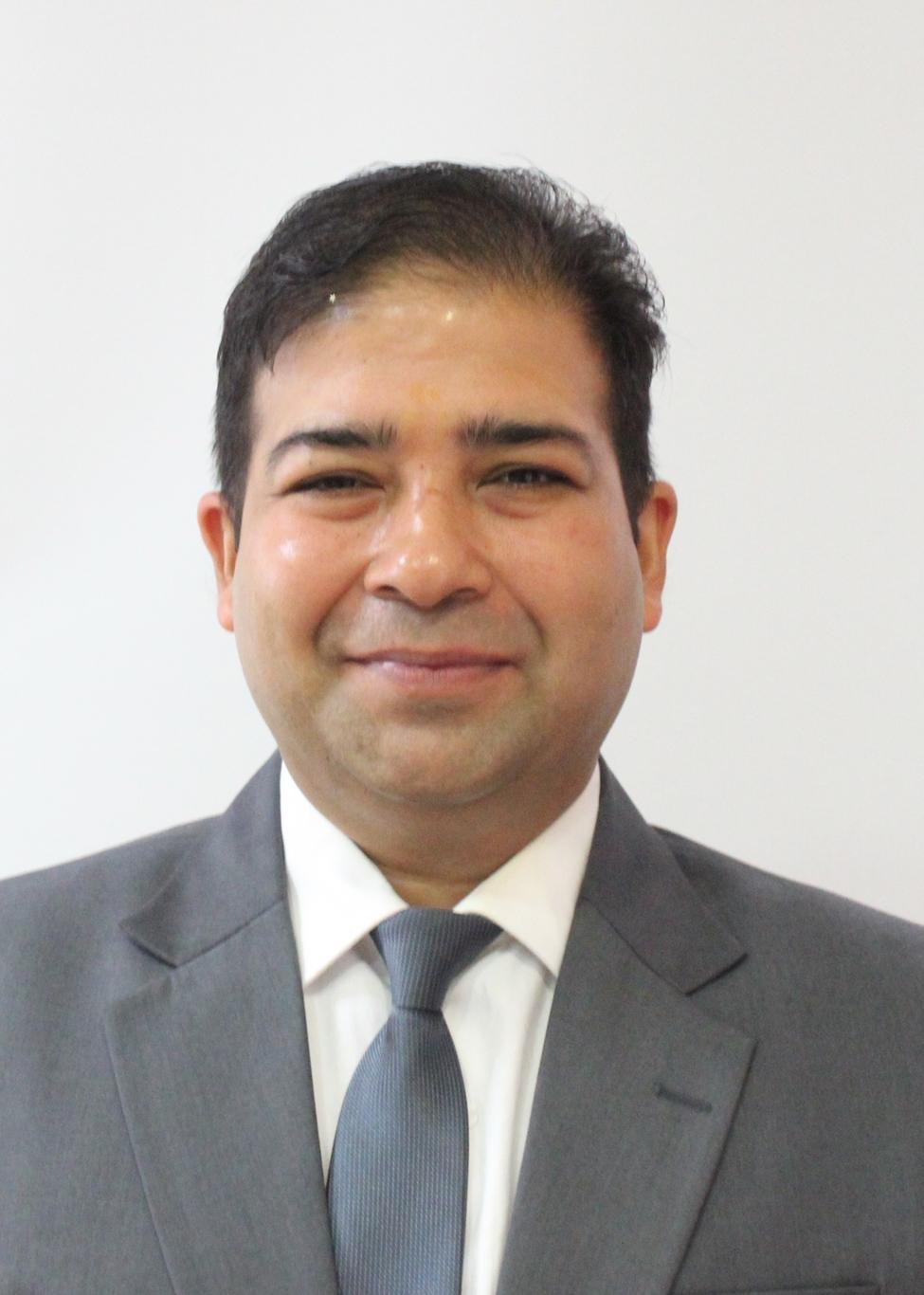
Karann P Vij
Karann is the founder of All ACS Investors, a Brisbane-based mortgage broking, buyers agent and builder partner practice. He works across a panel of 50+ Australian lenders and has spent the last decade helping first home buyers, investors and refinancers navigate finance, off-market property and new builds.
Want this kind of guidance on your own deal?
Book a free, no-obligation chat with Karann.
Book a free consultation